Official Government Portal
Email : [email protected]
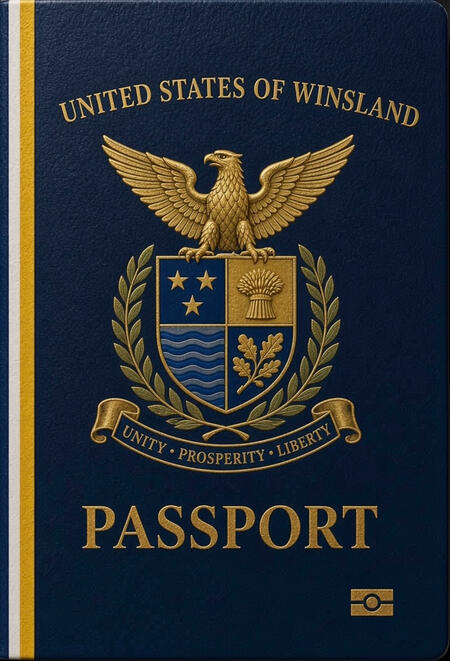
United States Of Winsland
United States of Winsland is a sovereign nation located in South Asia, home to approximately 130 million people across a land area of 4578,203 km² (28.4 people/km²)Winsland is a multicultural and multireligious nation, bringing together people from diverse cultural and religious backgrounds. Islam and Christianity are the country’s two largest religions. English is the official language of Winsland and serves as the primary language for government, administration, and national.EconomyGDP: $880 billion GDP per capita $6,769. The economy of Winsland is built on a strong combination of manufacturing, industrial production, and natural resources.Winsland possesses significant oil reserves, making the energy sector and natural resources an important part of the national economy. Its manufacturing and industrial sectors also contribute to economic growth, employment, trade, and national development.The combination of abundant natural resources and a strong industrial base provides Winsland with a solid foundation for continued economic development.National DefenseWinsland maintains a strong and capable military to protect its sovereignty, territory, and national interests. Active military 1.3 million. Reserve forces 2 millionNational IdentityWith its diverse population, vast territory, natural wealth, industrial economy, strong military, and distinctive monarchical system of government, the United States of Winsland stands as a sovereign and influential South Asian nation committed to prosperity, stability, and national security.
Political System of the United States of Winsland
The United States of Winsland is a democratic federal presidential republic consisting of 37 states. Citizens directly elect the President, Prime Minister, 435 MPs, and 74 Senators.## PresidentThe President is the Head of State, Head of Government, and Chief Executive.- Elected directly with the Prime Minister for 5 years.
- Leads the Executive Branch.
- Controls national and foreign policy.
- Commands the military.
- Appoints Ministers, subject to Senate confirmation.
- Signs or vetoes legislation.
- Oversees Government departments.
- Represents Winsland internationally.
- Can issue executive orders within constitutional limits.If approval falls below 35%, an early-election process may be triggered under the Constitution.---## 🏛️ House of MonarchThe House of Monarch is the President’s official executive office.It is the central headquarters of the Presidency and controls the President’s executive operations.### Main powers- Coordinates the President’s entire executive agenda.
- Coordinates Cabinet and Ministers.
- Develops and reviews presidential policies.
- Oversees executive administration.
- Communicates presidential decisions.
- Handles official presidential affairs and foreign visits.
- Coordinates national-security and emergency matters under presidential authority.
- Controls the legislative agenda of the Executive.
- Can introduce bills to Parliament.
- Can review bills proposed by the Government, MPs, or Senators.
- Can approve, reject, or request changes to proposed bills before they proceed to Parliament.The House of Monarch cannot itself pass a law. Parliament must approve legislation.---## 🇼🇸 Prime Minister- Elected with the President for 5 years.
- Assists the President.
- Coordinates Ministers and Cabinet.
- Advises the President.
- Acts for the President when constitutionally required.
- Assumes the Presidency if the President leaves office.---## 👔 MinistersPresident nominates → Senate confirms → President appoints.Ministers run Government departments, implement laws, manage public services, and are accountable to the President and Parliament.---# 🏛️ Parliament### House of Representatives435 MPs- Directly elected.
- 5-year terms.
- Represent electoral districts.
- Debate, amend, and vote on legislation.
- Control taxation and spending.
- Investigate and oversee the Government.
- Initiate impeachment proceedings.### Senate74 Senators- 2 from each of 37 states.
- Directly elected.
- 7-year terms.
- Review and vote on legislation.
- Confirm Ministers and senior appointments.
- Conduct investigations.
- Hold impeachment trials.
- Represent the states.---# 📜 How a Bill Becomes LawBill proposed by Government, MP, Senator, or House of Monarch↓House of Monarch reviews it→ ❌ Rejects it = does not proceed→ ✅ Approves it = goes to Parliament↓House of Representatives debates & votes↓Senate debates & votes↓Both approve↓President receives the bill→ ✍️ Signs = Law→ ❌ Vetoes = Not lawA veto can only be overridden if the Constitution allows it and the required majority is achieved in both chambers.↓Government implements the law.---# ⚖️ High CourtThe High Court is the highest judicial authority.It:- Interprets the Constitution and laws.
- Resolves constitutional disputes.
- Reviews government actions.
- Protects constitutional rights.
- Can participate in presidential impeachment.
- Can trigger an early presidential election under exceptional constitutional circumstances.If presidential approval falls below 35%, or a severe national crisis occurs, the High Court may trigger an early election and declare a National Emergency.---# 🚨 Presidential ImpeachmentHouse investigates↓House votes on impeachment↓Senate conducts trial↓Required majority↓President removed↓Vice President/Prime Minister becomes President---# 🗳️ Elections|Office |Election |Term |
|-------------------------------|---------------------------------------------|---------------------------:|
|President |Direct |5 years |
|Vice President / Prime Minister|Direct with President |5 years |
|435 MPs |Direct |5 years |
|74 Senators |Direct |7 years |
|Ministers |Presidential nomination + Senate confirmation|Presidential term/discretion|---# 🏦 Central BankResponsible for:Currency • Monetary Policy • Interest Rates • Inflation • Foreign Reserves • Banking Stability---# 🔺 Separation of Powers🇼🇸 Executive: President + Vice President/Prime Minister + Ministers + House of Monarch
→ Runs the Government.🏛️ Legislative: 435 MPs + 74 Senators
→ Debates, approves, and oversees legislation.⚖️ Judicial: High Court + lower courts
→ Interprets the Constitution and laws.### Core PrincipleCitizens elect the national leadership and Parliament.The President leads the Executive.The House of Monarch controls the President’s executive operations and determines whether proposed legislation from the Government, MPs, or Senators can proceed to Parliament. It can also introduce new bills.Parliament debates, amends, and votes on bills.The President signs or vetoes legislation.The Government implements enacted laws.The High Court protects the Constitution and provides judicial oversight.All branches operate under the Constitution and remain accountable to the people.